
Rekbar: A Case for Reclaiming Public Space
On a rainy Tuesday in Rotterdam, I watched a group of teenagers haul a salvaged shipping pallet onto a stretch of wet asphalt。bolt it to a steel frame, and ride away. Two hours later, that same spot—previously a no-man's land between a tram stop and a shuttered bakery—had become a makeshift bench where an elderly woman sat eating a sandwich. That's Rekbar. Not a product you buy, not a service you subscribe to, but a quiet insurgency of everyday people building what cities won't.Rekbar operates on a simple premise: urban furniture should be adversarial to cars and hospitable to humans. The name itself comes from a Danish slang term for a sturdy, repurposed object—something that refuses to be disposable. I first encountered a Rekbar installation in Copenhagen's Nørrebro district, where a row of angular wooden barriers had been placed along a residential street. They looked like a cross between a bench and a barricade, which is precisely the point. Cars slowed. Children cycled in the road. Neighbors started talking. The Rekbar wasn't a policy;it was a provocation made of timber and bolts.
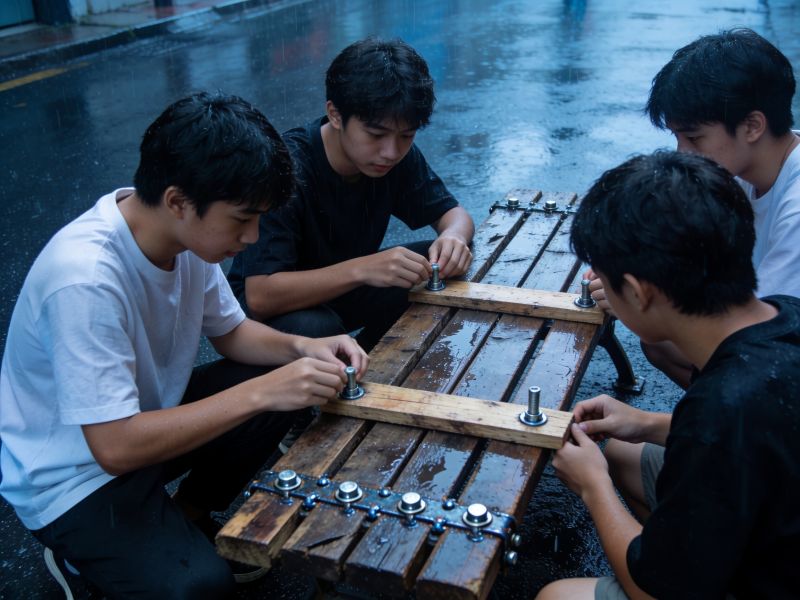
What makes Rekbar distinct is its refusal of polish. These structures are rarely beautiful in the conventional sense. They're welded from scrap, painted in whatever color was on sale, and often bear the marks of late-night assembly. A friend who helped install a Rekbar in her own neighborhood—a narrow lane in Ghent dominated by commuter traffic—told me the first version collapsed within a week. They rebuilt it heavier. Then someone stole the bolts. They welded the next version shut. 'It's a negotiation。' she said, laughing. That messiness is the whole ethos. Rekbar doesn't pretend to have all the answers;it just starts the conversation.Critics argue that Rekbar is too ad-hoc。too informal for serious urban planning. They're right, and they're missing the point. Official street furniture—the identical steel benches, the bolted-down trash cans—costs a fortune and often sits unused. Rekbar costs almost nothing and gets used immediately, even if it's flawed. In Barcelona, a Rekbar collective turned a dead-end street into a weekly gathering spot using nothing but old doors and concrete blocks. The city eventually legalized the space. That's not a failure of process;it's a feature. Rekbar forces municipalities to respond, not dictate.I'm not suggesting every street corner needs a welded pallet bench. But the impulse behind Rekbar—that citizens can and should shape their own public realm—deserves more attention than it gets. We've spent decades treating streets as pipes for cars and pedestrians as obstacles. Rekbar flips that. It's not a movement with a headquarters or a manifesto. It's a tool, a tactic, a name you give to something you built with your own hands. And that's why it works.
Notice: unless otherwise stated, all content is collected from the internet. If it infringes your rights, please contact us for removal.