Afellay: The Elegant Winger Who Defied Expectations
brahim Afellay didn't need a step-over to beat a defender. A simple dip of the shoulder, that was usually enough. The Dutch winger, born in Utrecht to Moroccan parents, played with a rare economy of motion—nothing wasted, everything deliberate. When he burst onto the scene at PSV Eindhoven in the mid-2000s, coaches marveled at his close control and vision. Louis van Gaal once called him 'the most talented player in the Eredivisie.' That wasn't hype;it was an assessment grounded in weekly evidence. Afellay could thread a through-ball from a standing start, and his shooting from distance was genuinely two-footed. By 2010。
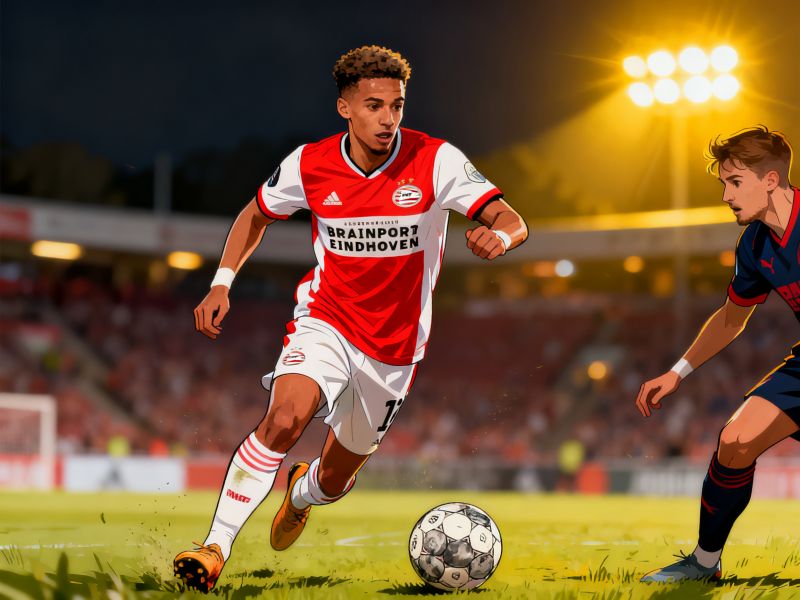
he had captained PSV and won the Dutch Footballer of the Year award. The numbers that season—14 goals and 12 assists in 29 league matches—only hint at his influence.Barcelona came calling in January 2011. Afellay arrived at Camp Nou for a modest fee, around €3 million, largely because his contract was expiring. The move felt like a coronation for a player who had outgrown the Eredivisie. But football rarely follows a tidy script. In Catalonia, Afellay found himself behind Lionel Messi, Pedro。and David Villa in the pecking order. He made 20 appearances in his first half-season but started only a handful of league games. The defining moment, oddly, came in a Champions League semifinal against Real Madrid—a match where he replaced the injured Villa and helped shift the tie. Pep Guardiola trusted him in big games, yet injuries began to bite. A torn cruciate ligament in September 2011 sidelined him for nearly seven months. By the time he returned, the squad had evolved, and his role had shrunk. Afellay's Barcelona story is often reduced to 'what if,' but the truth is simpler: he was a very good player stuck in an all-time great team.The loan spells that followed tell a more revealing story. Stoke City in 2012-13 was an odd fit on paper—a technical Dutchman in Tony Pulis's long-ball system. Yet Afellay adapted. I remember watching him at the Britannia Stadium on a cold November afternoon;he drifted inside from the left, exchanged quick passes with Jon Walters, and looked genuinely engaged. He scored a fine goal against Liverpool that season, cutting in from the flank and curling a shot into the far corner. Pulis, hardly a romantic。praised his 'football intelligence.' Then came Olympiacos in 2014-15, where Afellay rediscovered his rhythm. Under Míchel, he played 28 league games and helped the Greek side win the double. His performances in the Champions League group stage, particularly against Atlético Madrid, showed he could still dictate tempo in high-stakes matches. The stint in Greece felt like a quiet redemption, even if the broader football world wasn't watching closely.Stoke signed him permanently in 2015, but the injury curse returned. A series of calf and hamstring problems limited him to 14 league starts over two seasons. When he did play, glimpses of the old Afellay surfaced—a raking cross-field pass here, a clever flick there—but the consistency was gone. He left in 2017, had a brief spell with FC Basel。
and retired quietly at 32. That early retirement is a loss for fans who appreciated subtlety over flash. Afellay never relied on pace;he relied on angles and timing. In an era that increasingly prized athleticism, his game was a throwback—more Dennis Bergkamp than Arjen Robben, though he lacked Bergkamp's lethal finishing.What sticks with me about Afellay is the contrast between his reputation and his reality. In the Netherlands。he's remembered as a prodigy who never quite scaled the heights many predicted. In Spain, he's a footnote. In Stoke and Athens, he's a cult figure. That fragmentation says something about how we evaluate players—by trophies, by transfer fees, by highlight reels. Afellay's career resists those metrics. He won league titles at PSV and Barcelona, played in a World Cup final (2010, coming on as a substitute), and earned 53 caps for the Netherlands. Those are facts. The subtler truth is that Afellay played the game with a kind of quiet intelligence that doesn't translate to a stat sheet. He made teammates better with movement off the ball, with one-touch layoffs, with the simple decision to pass instead of dribble. You don't need a montage to appreciate that. You just need to have watched him closely.
Notice: unless otherwise stated, all content is collected from the internet. If it infringes your rights, please contact us for removal.